In today’s rapidly evolving work environment, people have more career choices than ever before. Traditional full-time employment used to be the primary path for most professionals, offering stability, predictable income, and long-term career growth within a single organization. However, with the advancement of digital technology, remote work, and global connectivity, freelancing has emerged as a powerful alternative. Millions of professionals across the world now choose to work independently, offering their skills and services to multiple clients instead of working for a single employer.
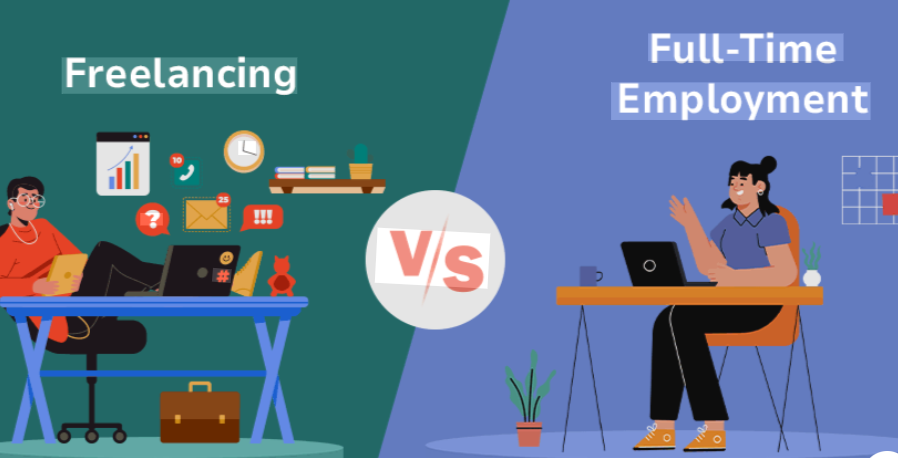
This shift has sparked an important debate: Freelancing vs Full-Time Job – which one is better? The answer is not straightforward because both career paths offer unique advantages and disadvantages. Some people thrive in the flexibility and independence of freelancing, while others prefer the stability and structured environment of a full-time job.
Understanding the differences between freelancing and full-time employment is essential for making an informed career decision. Factors such as financial stability, work-life balance, job security, career growth, skill development, and personal preferences all play significant roles in determining which path is better for an individual.
This article explores freelancing and full-time jobs in detail, comparing their benefits, challenges, and suitability for different personalities and career goals.
Understanding Freelancing
Freelancing refers to working independently rather than being employed by a single company. Freelancers offer their skills or services to multiple clients on a project-by-project basis. They may work remotely from home, from coworking spaces, or even while traveling.
Freelancers are essentially self-employed professionals. They are responsible for finding clients, managing projects, negotiating prices, and handling their own taxes and finances.
Common freelancing fields include:
-
Graphic design
-
Content writing
-
Web development
-
Digital marketing
-
Video editing
-
Software development
-
Translation
-
Online tutoring
-
Photography
The rise of online platforms has made freelancing more accessible than ever. Professionals can connect with clients worldwide and build a career without being limited by geographic boundaries.
Freelancing allows individuals to take control of their careers and build a business around their skills. However, it also requires strong discipline, self-motivation, and the ability to manage uncertainty.
Understanding Full-Time Jobs
A full-time job refers to traditional employment where an individual works for a single employer under a formal contract. Employees usually work fixed hours each week and receive a regular salary.
Full-time employees are part of an organization and often work within teams under managerial supervision. Their responsibilities and tasks are defined by their job role, and they usually receive benefits such as health insurance, paid leave, and retirement plans.
Typical characteristics of full-time employment include:
-
Fixed working hours
-
Monthly salary
-
Company-provided benefits
-
Structured career progression
-
Organizational hierarchy
-
Job security (depending on the industry)
Full-time jobs provide stability and predictability. Employees know how much they will earn each month and what their responsibilities are. For many people, this stability is a key factor in choosing traditional employment.
However, full-time jobs may also involve strict schedules, limited flexibility, and workplace stress.
Key Differences Between Freelancing and Full-Time Jobs
Although both freelancing and full-time employment involve working and earning income, the way they operate is very different.
1. Income Structure
Freelancers are usually paid per project, per hour, or per task. Their income can vary from month to month depending on the number of clients and projects they have.
Full-time employees, on the other hand, receive a fixed monthly salary. This provides financial stability and predictable income.
While freelancers may have the potential to earn more, their income is not always consistent.
2. Work Flexibility
One of the biggest advantages of freelancing is flexibility. Freelancers can decide:
-
When to work
-
Where to work
-
Which projects to accept
-
How much work to take on
Full-time employees usually follow fixed schedules determined by the company. Although remote work has become more common, many organizations still require specific working hours.
3. Job Security
Full-time jobs generally provide more job security than freelancing. Employees typically sign contracts and are protected by labor laws.
Freelancers must continuously find new clients and projects. If they lose a client, their income may decrease immediately.
This uncertainty can make freelancing stressful for some individuals.
4. Work Environment
Freelancers usually work independently. They may communicate with clients online but often work alone.
Full-time employees work within a team environment where they collaborate with colleagues, managers, and other departments.
Some people enjoy teamwork and office culture, while others prefer working independently.
5. Benefits and Perks
Full-time employees often receive additional benefits such as:
-
Health insurance
-
Paid vacation
-
Sick leave
-
Retirement plans
-
Bonuses
Freelancers typically do not receive these benefits. They must manage their own insurance, savings, and retirement plans.
Advantages of Freelancing
Freelancing has become increasingly popular because it offers several appealing advantages.
1. Flexible Schedule
Freelancers can design their own work schedules. They can work during the hours when they feel most productive.
This flexibility allows freelancers to balance work with personal responsibilities, hobbies, or travel.
2. Independence
Freelancers are their own bosses. They are free to make decisions about their work, clients, and career direction.
This independence can be empowering and rewarding for individuals who enjoy autonomy.
3. Unlimited Earning Potential
Unlike salaried employees, freelancers are not limited by a fixed income. They can increase their earnings by:
-
Taking on more clients
-
Increasing their rates
-
Expanding their services
-
Building a personal brand
Successful freelancers can sometimes earn significantly more than traditional employees.
4. Location Freedom
Freelancers can work from anywhere with an internet connection. Many freelancers choose to work from home or travel while working remotely.
This location independence is one of the main reasons people choose freelancing.
5. Variety of Work
Freelancers often work with different clients from various industries. This variety keeps work interesting and helps develop a wide range of skills.
Challenges of Freelancing
Despite its benefits, freelancing also comes with several challenges.
1. Income Instability
Freelancers do not always have a steady stream of work. Some months may be very profitable, while others may be slow.
This financial uncertainty can make budgeting difficult.
2. Finding Clients
Freelancers must actively market themselves and search for new clients. This requires networking, building portfolios, and promoting services.
Client acquisition can be time-consuming and stressful.
3. Self-Discipline
Freelancers must manage their own schedules and deadlines. Without supervision, it can be easy to become distracted or procrastinate.
Successful freelancers need strong time-management skills.
4. No Employee Benefits
Freelancers do not receive benefits like paid vacation or health insurance. They must handle their own financial planning and savings.
5. Isolation
Working alone can sometimes lead to feelings of isolation. Freelancers may miss the social interaction and teamwork that comes with office jobs.
Advantages of Full-Time Jobs
Full-time employment remains popular because it offers several important benefits.
1. Financial Stability
Full-time employees receive consistent salaries, which makes it easier to plan expenses, save money, and manage financial responsibilities.
2. Employee Benefits
Companies often provide benefits such as healthcare, retirement plans, bonuses, and paid leave.
These benefits add significant value beyond the base salary.
3. Structured Career Growth
Many organizations provide clear career paths, promotions, and professional development opportunities.
Employees can gradually move up the corporate ladder.
4. Professional Networking
Working in a company allows employees to build relationships with colleagues, mentors, and industry professionals.
These connections can be valuable for long-term career growth.
5. Skill Development
Many companies invest in training programs and workshops that help employees develop new skills.
This structured learning environment can accelerate professional growth.
Challenges of Full-Time Jobs
While full-time employment offers stability, it also has certain limitations.
1. Limited Flexibility
Employees often have fixed schedules and limited control over their working hours.
This lack of flexibility can make it difficult to balance personal commitments.
2. Office Politics
Working in a corporate environment sometimes involves office politics, conflicts, or hierarchical challenges.
These situations can create stress for employees.
3. Limited Income Growth
Salaries in traditional jobs often increase gradually through annual raises or promotions.
This means income growth may be slower compared to successful freelancing.
4. Less Independence
Employees must follow company policies, management decisions, and organizational structures.
They usually have less control over their work compared to freelancers.
Which Career Path Is Better?
The answer depends on personal preferences, lifestyle goals, and personality traits.
Freelancing may be better for people who:
-
Value flexibility and independence
-
Are self-motivated and disciplined
-
Enjoy entrepreneurship
-
Are comfortable with financial risk
-
Prefer working remotely
Full-time jobs may be better for people who:
-
Prefer stable income
-
Enjoy teamwork and collaboration
-
Want structured career growth
-
Value employee benefits
-
Prefer predictable routines
There is no universal answer because different individuals thrive in different environments.
The Rise of Hybrid Careers
Interestingly, many professionals today combine both career paths.
Some individuals work full-time while freelancing part-time. Others begin with a full-time job and transition into freelancing later in their careers.
This hybrid approach allows people to enjoy the stability of employment while exploring the freedom of freelancing.
Future of Work
The future of work is likely to include both freelancing and traditional employment. Technology, remote work tools, and global connectivity are making freelancing more accessible.
At the same time, companies still rely heavily on full-time employees to maintain stability and organizational structure.
Many experts believe that flexible work arrangements will continue to grow in the coming years.
Conclusion
Freelancing and full-time jobs each offer distinct advantages and challenges. Freelancing provides flexibility, independence, and unlimited earning potential, but it also requires self-discipline and the ability to manage financial uncertainty.
Full-time employment offers stability, structured career growth, and valuable benefits, but it may limit flexibility and independence.
Choosing between freelancing and a full-time job depends on individual priorities, personality, and long-term career goals. Some people thrive in the freedom of freelancing, while others prefer the security of traditional employment.